Would you prefer to listen to it? Play the audio here
Preparing for El Niño 2026 is an opportunity to create jobs, strengthen supply chains, and ensure business continuity.
Marian Buraschi - Libélula Partner and Director
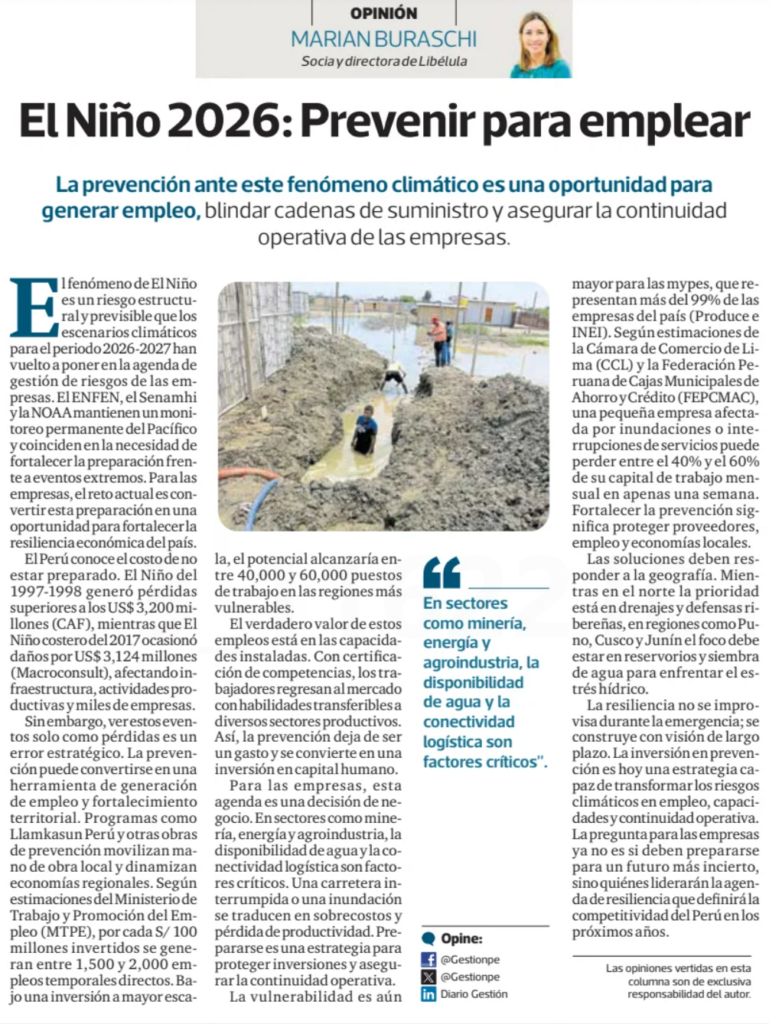
El Niño is a structural and predictable risk that climate scenarios for the 2026–2027 period have once again placed on companies’ risk management agendas. ENFEN, SENAMHI, and NOAA continuously monitor the Pacific and agree on the need to strengthen preparedness for extreme events. For companies, the current challenge is to turn this preparedness into an opportunity to strengthen the country’s economic resilience.
Peru knows the cost of being unprepared. The 1997–1998 El Niño caused losses exceeding US $3,200 million (CAF), while the 2017 Coastal El Niño caused damage amounting to US $3,124 million (Macroconsult), affecting infrastructure, productive activities, and thousands of businesses.
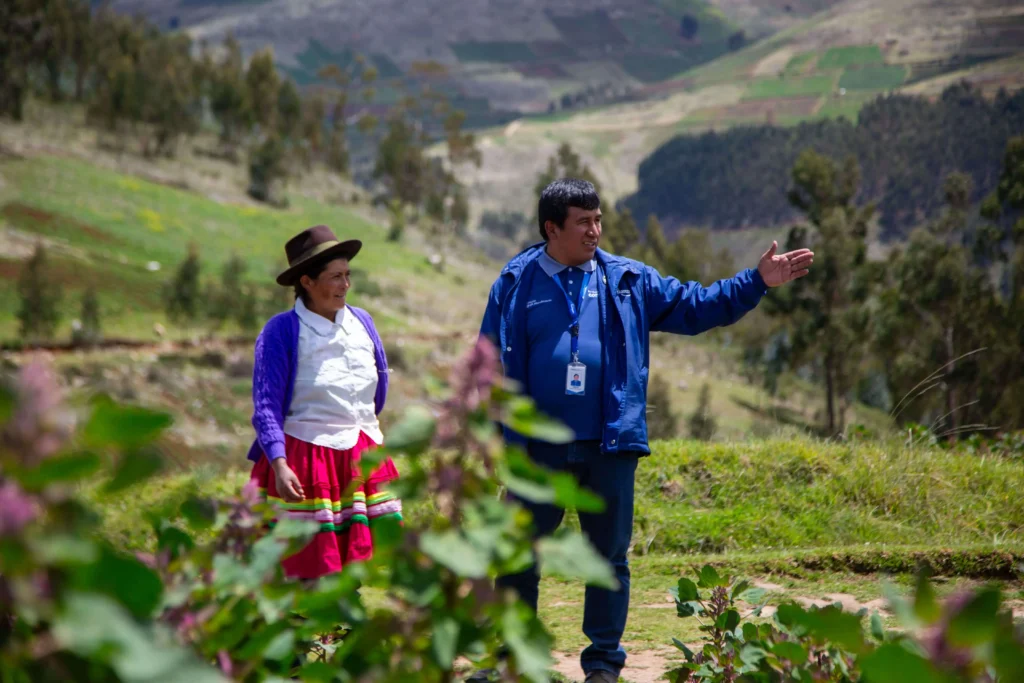
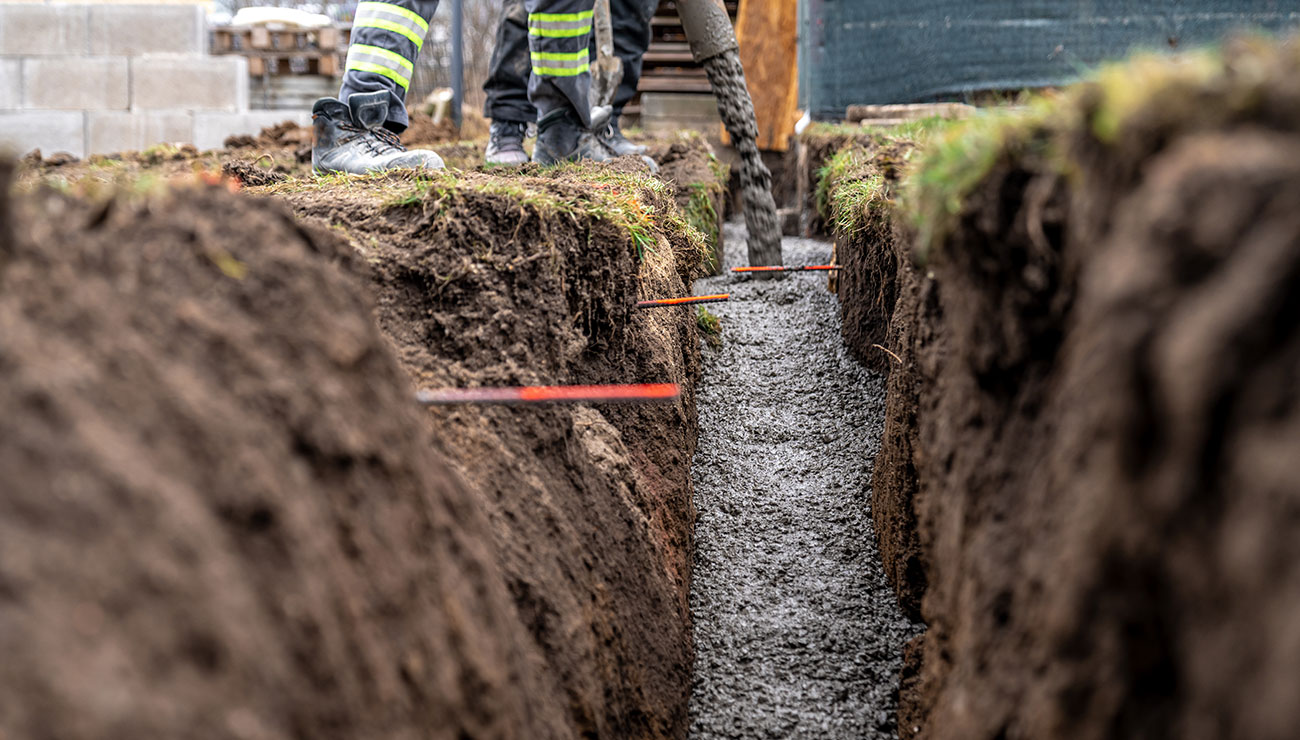
However, viewing these events solely as losses is a strategic mistake. Prevention can become a tool for job creation and regional development. Programs such as Llamkasun Perú and other prevention initiatives mobilize the local workforce and stimulate regional economies. According to estimates from the Ministry of Labor and Employment Promotion (MTPE), for every S/ 100 million invested, between 1,500 and 2,000 direct temporary jobs are created. With larger-scale investment, the potential could reach between 40,000 and 60,000 jobs in the most vulnerable regions.
The true value of these jobs lies in the skills they build. With certification of their competencies, workers re-enter the job market with skills that are transferable to various productive sectors. Thus, prevention ceases to be an expense and becomes an investment in human capital.
For companies, this agenda is a business decision. In sectors such as mining, energy, and agribusiness, water availability and logistics connectivity are critical factors. A blocked highway or a flood results in cost overruns and lost productivity. Being prepared is a strategy to protect investments and ensure operational continuity.
The vulnerability is even greater for micro and small enterprises (Mypes), which account for more than 99% of the country’s businesses (PRODUCE and INEI). According to estimates from the Lima Chamber of Commerce (CCL) and the Peruvian Federation of Municipal Savings and Credit Unions (FEPCMAC), a small business affected by flooding or service disruptions can lose between 40% and 60% of its monthly working capital in just one week. Strengthening prevention measures means protecting suppliers, jobs, and local economies.
Solutions must be tailored to the local geography. While in the north the priority is on drainage and riverbank protection, in regions such as Puno, Cusco, and Junín the focus should be on reservoirs and water conservation measures to address water stress.
Resilience cannot be improvised during an emergency; it is built with a long-term vision. Investing in prevention is now a strategy capable of transforming climate risks into jobs, capabilities, and operational continuity. The question for companies is no longer whether they should prepare for a more uncertain future, but rather who will lead the resilience agenda that will define Peru’s competitiveness in the coming years.
Published in the Gestión Newspaper