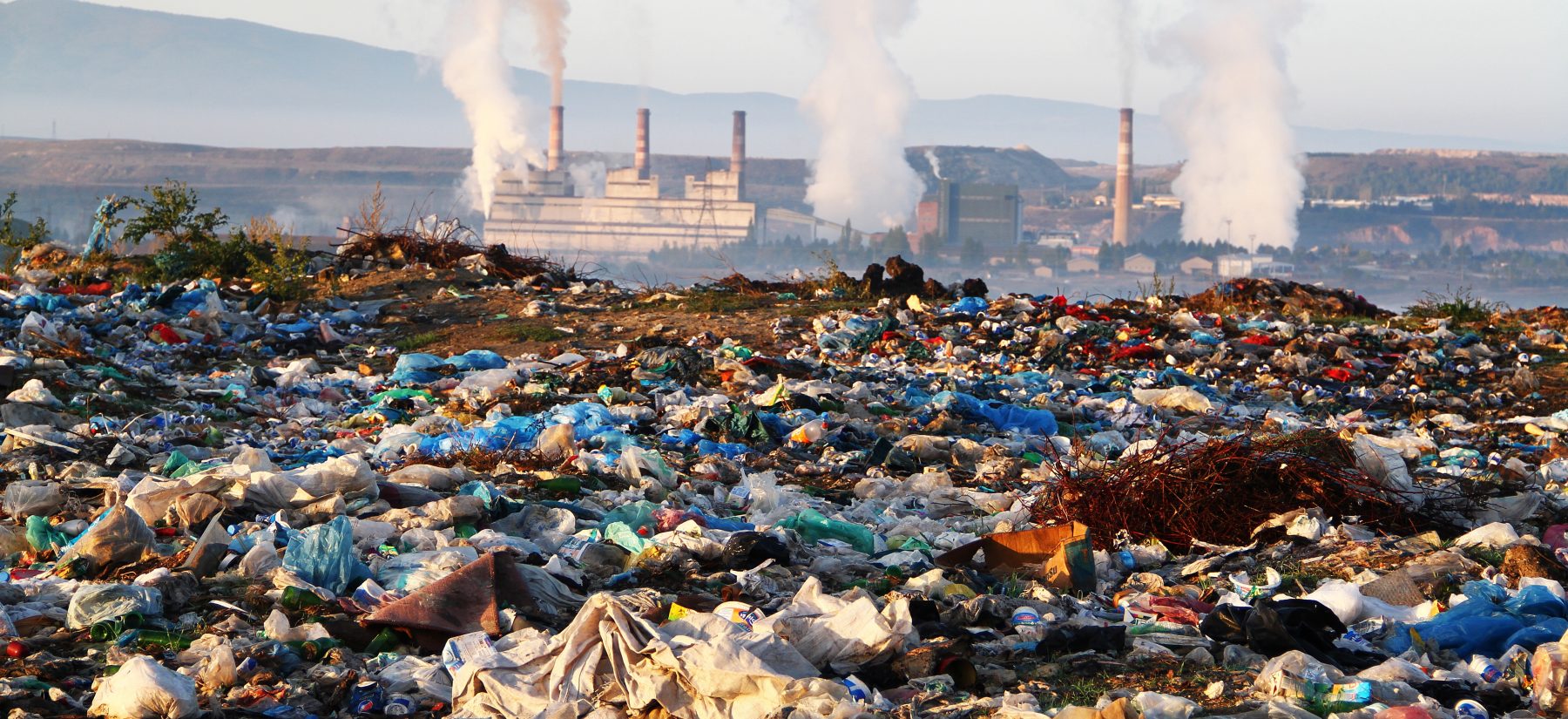
Last July 29th was determined as Earth Overshoot Day for 2019. which means that if we, as humanity, had an annual natural resource budget available, it would have been annual budget of natural resources available, it would have been exhausted on that day; practically five months before the end of the year. exhausted on that day; practically five months before the end of the year. That is In other words, we would need 1.75 planet Earths to satisfy the annual demand for annual demand for natural resources, when in reality we only have one.
This date, calculated by the international organization Global Footprint Network, unfortunately arrives earlier and earlier each year. Network, which unfortunately arrives earlier and earlier in the calendar each year, is not the only environmental alarm bell. is not the only environmental alarm bell, as the Intergovernmental Panel on Climate Change (IPCC) has It should be recalled that the UN Intergovernmental Panel on Climate Change (IPCC) Climate Change (IPCC) has also warned on repeated occasions that we have until 2030 to that we have until 2030 to limit global warming to no more than 1.5 to limit global warming to a maximum of 1.5 degrees Celsius or else there will be serious serious consequences of this climate change, some of which are beginning to be felt of which are beginning to be felt with greater force and severity year after year: hurricanes, floods, droughts, floods, droughts, hurricanes, floods year: hurricanes, floods, droughts, fires, and so on.
This overexploitation of natural capital limits the resilience capacity of the Earth and puts the subsistence of all ecosystems at risk. resilience and threatens the livelihoods of all ecosystems, unless significant changes are unless significant changes are made to current patterns of human production, consumption and investment. production, consumption and investment patterns.
From This is not only the responsibility of governments and/or companies, of course, but of each of us, as our actions as but of each and every one of us, since our actions as consumers, as members of a community, or as citizens of an as consumers, as members of a community, or as citizens of a country, can be key to the as consumers, as members of a community, or as citizens of a country, can be key to detonate the transformation of a linear economy (based on the extraction of resources). linear economy (based on the extraction of resources and the transformation of raw materials for the of raw materials for the subsequent production of goods, which are marketed and consumed, and and consumed, and whose residues are finally discarded), towards what is and consumed, and whose waste is finally discarded), towards what is now known as a “circular economy”.
From according to the Ellen MacArthur Foundation (an international reference on the subject), the circular According to the Ellen MacArthur Foundation (an international reference on the subject), the circular economy “is a restorative economy that aims to keep products, components and the objective of maintaining the usefulness of products, components and materials, and preserving materials, and preserve their value. It therefore minimizes the need for new inputs of materials and energy, while reducing the environmental pressures related to the environmental pressures related to resource extraction, emissions and waste. emissions and waste. In this way, opportunities arise to growth and employment, while at the same time reducing environmental pressures and impacts. environmental pressures and impacts.
This alternative economic model is based on three principles:
- Preserve and enhance natural capital, controlling finite stocks and balancing renewable resource flows.
- Optimize the use of resources, rotating products, components and materials with maximum utility at all times, both in technical and biological cycles.
- Promote the efficiency of the system, revealing and eliminating negative externalities.
To to put them into practice, it is necessary to change old paradigms, and the commitment of all sectors, since it is not enough just to reuse and recycle (which of course can be a good first step), but also to reuse and recycle (which of course can be a good first step), but also to use less and less resources in the to use fewer and fewer resources in the production processes, to opt for durable durable goods over disposable or single-use goods, generating less waste, promoting greater use of clean energies and considering the social and environmental and consider the social and environmental impacts in the consumption and investment decision and investment decision-making processes, to mention a few.
All may seem too complex, but you can start with small actions at home or at work, which collectively small actions at home or at work that collectively contribute to a more sustainable and long-term contribute to a more sustainable and long-term future in our community, state, country, region and planet. our community, state, country, region and planet.
*Director of the IDEARSE Center for Corporate Responsibility and Sustainability at Universidad Anáhuac México.