With the lifting of the quarantine and the economic crisis that has worsened in recent months, it is urgent to reconfigure business activities with an environmental focus that will boost competitiveness and generate employment, says specialist Marian Buraschi.
Now that the quarantine has been lifted, our economy begins a complex process towards its reactivation, where companies are forced to evolve in order to remain in the market. Organizations such as the Association of Peruvian Municipalities, Lima Cómo Vamos, Movimiento Ciudadano Frente al Cambio Climático, WWF Peru, Periferia, among others, have already spoken out demanding a sustainable economic recovery, The company's brands are also expected to be environmentally friendly, in addition to generating income and employment. Similarly, 6 out of 10 consumers expect brands to state how they will contribute to the future of the country (GFK, 2020). The pandemic has revealed the connection between our daily activities and the deterioration of the environment.
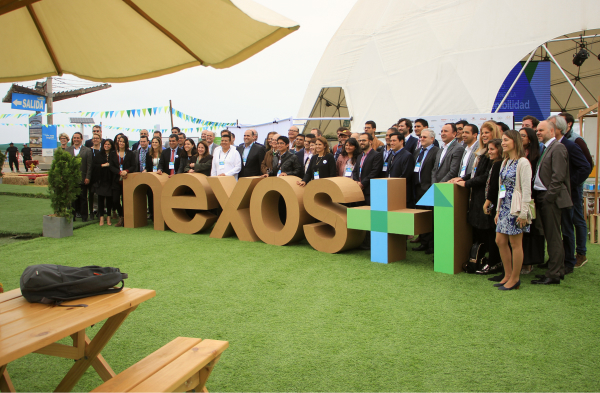
“Undoubtedly, the “new normal,” as many have called it, will be the product of a dramatic evaluation of the traditional economic and social systems, and the Peruvian companies' responsibility with the environment will play a fundamental role in this change of approach,” says Marian Buraschi, Director of nexos+1. With this in mind, the specialist explains the 3 keys to implementing a sustainability approach in our companies and being competitive in the “new normal”.
Purpose
In the context of a sustainable economic revival, communicating the purpose of generating value and solving environmental and social problems is important, but the move to action is vital. “In addition to asking ourselves why our company exists and how relevant we are to the environment, we need to begin to take action. In a post-COVID-19 world, the consumer will be increasingly vigilant, and a purpose that remains just words will not be well received,” says Buraschi.
Coherence in the value chain
In 2017, more than 200 leading global companies identified that 65% of their social and environmental impact depended on their suppliers (KPMG). “In this “new normal”, the companies with sustainable suppliers will be able to adapt quickly and efficiently to the new to the new conditions and demands of the market. A value chain is not only a source of cost reduction, risk reduction and indirect negative impacts; it is also an opportunity to generate quality jobs outside your organization. In the current context, this is crucial,” says the expert.
Resilience
Understood as the ability to manage crisis and turn it into an opportunity, resilience is the most important quality in this context of imminent risks, such as COVID-19, and latent risks, such as climate change. “Resilience has 4 aspects: the ability to anticipate, through the analysis of the context and the business; the ability to absorb shocks, financial health is fundamental to the company's financial health. ability to adapt, through agility and team cohesion; and the ability to transform ourselves, using technology and adopting sustainability standards. A company that wants to compete today must take social and environmental issues into account in its strategy,” says the Director of nexos+1.
“The climate change is a latent crisis which may have greater effects than COVID-19. However, companies have the opportunity to create a new reality: to reactivate the economy and generate new jobs, at the same time as generate a positive impact on the environment. Leaders who learn the lessons of the pandemic have a head start in the ‘new normal,’” he concludes.

Marian Buraschi
Director of the nexos+1 platform