By: Pablo Santillan Caicedo y Stefanía Sibille Grández, Knowledge Management team in the DecarBOOST project
In this event moderated by Margarita Cabrera, Climate Finance Program Manager for CCAP, DecarBOOST invited opinion leaders working in Latin America and the Caribbean to reflect on the future of investments for the decarbonization of the region towards 2050:
- Graham Watkins, Head of the Climate Change Division, IDB - Inter-American Development Bank
- Jack Balsdon, Senior Climate Change Associate, PRI - Principles for Responsible Investment
- Marcela Jaramillo, Senior Associate, 2050 Pathways Platform
- Marta Torres Gunfaus, Senior Researcher in Climate and Energy, IDDRI - Institute for Sustainable Development and International Relations

Graham Watkins shared how the IDB approaches the issue of decarbonization and climate change action for the future. He invited us to think about long-term planning and how we are going to revive economies in a post-pandemic period. Graham shared some documents of interest, such as the 2025 vision that the IDB developed to help Latin American and Caribbean countries to sustainably come out of the crisis, out of the pandemic; it would be useful to analyze the Climate Change Action Plan, which tries to link the concepts of alignment with the Paris Agreement with the concept of sustainable recovery. An analysis of what has happened during the pandemic was recently published, showing shocking figures, such as that 1.2 million people have died as a result of the pandemic, while the region has eight of the ten most affected countries in terms of per capita mortality from the pandemic.
But the pandemic brings us the opportunity to bring about fundamental changes. For example, every dollar of investment in resilience can reduce $4 in future costs, This is key when we have to react to disasters. In a study we did with the International Labor Organization, it was concluded that the following can be generated 15 million net new jobs in the region through decarbonization. Decarbonization can increase economic growth by 1%. At the country level, we are seeing the same results; in Costa Rica, we see that the net impacts are worth $41 billion over 30 years, and not only this brings a lot of opportunities for private sector investments: $19 billion of private sector opportunities for the future. We have just completed a similar analysis in Peru, in which we saw results of 140 billion of benefits over time. So, and we will continue to do that kind of analysis, it shows us that this is the direction we should go, for all the benefits that decarbonization brings.

For Marcela Jaramillo, According to the 2050 Pathways Platform, not only is decarbonization economically and technically feasible, but it has also gone from being a topic of debate to a reality in more than 130 countries that have committed to achieving zero net emissions by 2050; in the region, nine countries are working on developing their long-term strategies. It is a living process that deserves to be periodically re-evaluated and gaps filled. It is a complex process that will have questions that will have to be resolved over time.
While talk of decarbonizing the entire economy, of reducing emissions to zero net emissions, may seem a bit abstract, it is possible to think about the five pillars of decarbonization, which is how they are usually called. Marcela proposed as a good start the decarbonization of the electricity generation matrix, strongly expanding the use of renewable energy. Secondly, and in parallel to the above, electrifying all energy uses, to make use of renewable energy, for example, electrify transportation, but also industry, homes; electrify the use of boilers, heaters or other elements that we can use with electric technologies. The third step and one that brings multiple development benefits, is to expand the use of public and non-motorized transport in our cities and regions, which is essential to achieve decarbonization in time. The fourth step is reducing deforestation y promote reforestation and restoration of carbon-rich ecosystems. And the fifth involves increasing efficiency in the different processes, which includes, for example, the change in the use of materials, or the change of our diets to a less intensive meat consumption. Thus, these five pillars show us in a synthetic way what decarbonization means.
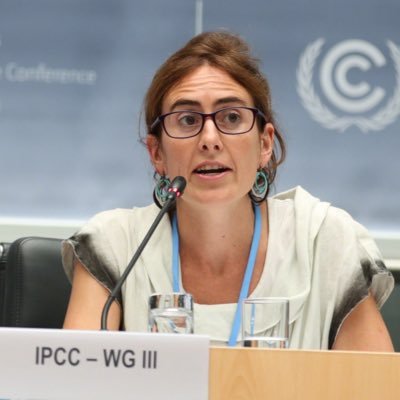
Marta Torres Gunfaus, IDDRI highlighted a research project, also supported by the IDB and the French Platform and Cooperation Agency, which basically proposes deep decarbonization routes for Argentina, Ecuador, Costa Rica, Colombia, Peru and Mexico, which in addition to showing that decarbonization is technically and economically feasible, defines the implications of choosing one route or another.
The deep decarbonization pathways put development, and with it the reduction of poverty and inequality, first, and then any other national or sectoral objectives that the country may have. In practice, it is not an exercise of identifying mitigation measures from a baseline and going down, but rather it is trying to understand how to transform the economy to meet multiple objectives.. Therefore, decarbonization that does not go hand in hand with these priority development objectives has no place. It is possible to find measures to ensure that the costs of the transition do not fall on the most vulnerable populations or the most disadvantaged social classes. We have been able to confirm the importance of what the Intergovernmental Panel on Climate Change (IPCC) and science have already warned us about: the magnitude of the challenge demands a great deal of international cooperation, that it is not enough to do as much as possible in each country, but that we must somehow ensure that the total of our intervention is more than the sum of its parts.

Jack Balsdon, The CEO of PRI - Principles for Responsible Investment, said that in the private sector we are seeing a massive shift in momentum, in terms of the number of players, who are committing to climate goals and to decarbonizing their own portfolios; He said that in the private sector we are seeing a massive shift in momentum, in terms of the number of actors, who are committing to climate goals and to decarbonizing their own portfolios; an example of what is happening in the private financial sector right now is the global campaign that has been established by the UN on high-level climate action advocates called the Race To Zero, a campaign designed to catalyze net zero commitments from all actors in the economy and which seeks that investors, companies, cities should catalyze net zero commitments that are credible.
These stakeholders have declared commitments to net zero by 2050, have committed to implement a strategy to outline how to achieve this. We are seeing a massive shift in the number of private sector players who are engaging through the Race to Zero, which is great progress.. 250 financial institutions have committed to be part of the Race to Zero campaign. And these are commitments from all aspects of the financial system: asset owners, insurers, pension funds, endowments, sovereign wealth funds, asset managers, banks and insurers. So we're starting to see all areas of the economy, starting to make commitments for decarbonization, and the transition to net zero, which is really important.
But, of course, for capital to flow, we also need governments to make amendments, because investors often expect governments to give policy signals, which then gives investors confidence to invest in the transition. So investors ask for a number of things from governments. And, of course, the main one is that they update their NDCs before the COP, with ambitious NDCs and with a clear strategy on how they are going to achieve it. So we need ambitious NDCs that put us on the path to achieving net zero by 2050. But we also need more detailed policy implementation strategies on how we are going to achieve those NDCs. The financial sector is calling on governments for initiatives such as. the elimination of fossil fuel subsidies to allow capital to flow into clean energy infrastructure, coal phase-out targets thermal, goals to eliminatephasing out of internal combustion engine vehicles, etc. We have to think of a just transition, and that all communities and workers should not be left behind. These are the tasks that investors are asking governments to do to give them the confidence to invest in the transition.