The companies that are leading the way in sustainability in the Peruvian private sector came together in a space that reminded us why this community is necessary: the most complex decisions - those that transform operations, business models and value chains - require articulation, action and collaboration.
The meeting was held at the Lexus Peru headquarters in Miraflores, and brought together those who face real challenges today: ambitiously decarbonizing, adapting to climate risks, sustaining competitiveness and strengthening internal capabilities. A common message emerged: the importance of action, collaboration and technical clarity to move forward without duplicating efforts or assuming unnecessary costs.
Marian Buraschi, partner and director of Dragonfly, highlighted that nexos+1 and Libélula have accompanied more than 500 companies on their journey because sustainability is the only valid business strategy. "Companies are making real transformations based on their purpose, It is important that these stories are known,” he said.
In this context - where reducing emissions, making the right technological decisions and aligning areas is part of everyday life - the nexos+1 community has consolidated itself as a space for strategic and practical orientation and continuous learning. In 2024 alone, more than 16 thousand professionals strengthened their capabilities and seven new companies joined as corporate members.
The vision of collaboration was also reflected in the interventions by Vicente Azula, Lexus manager, who emphasized how the culture of the omotenashi guides its approach to sustainability. For its part, David Caro, corporate planning and corporate affairs manager of Toyota del Peru, presented a data-driven route: with 98.9% of its emissions from vehicle use, Toyota has avoided 969 thousand tons of CO₂e. in 15 years thanks to its electrified portfolio. His message resonated in the room: “There is no single path to carbon neutrality; the strategy depends on the reality of each country.”
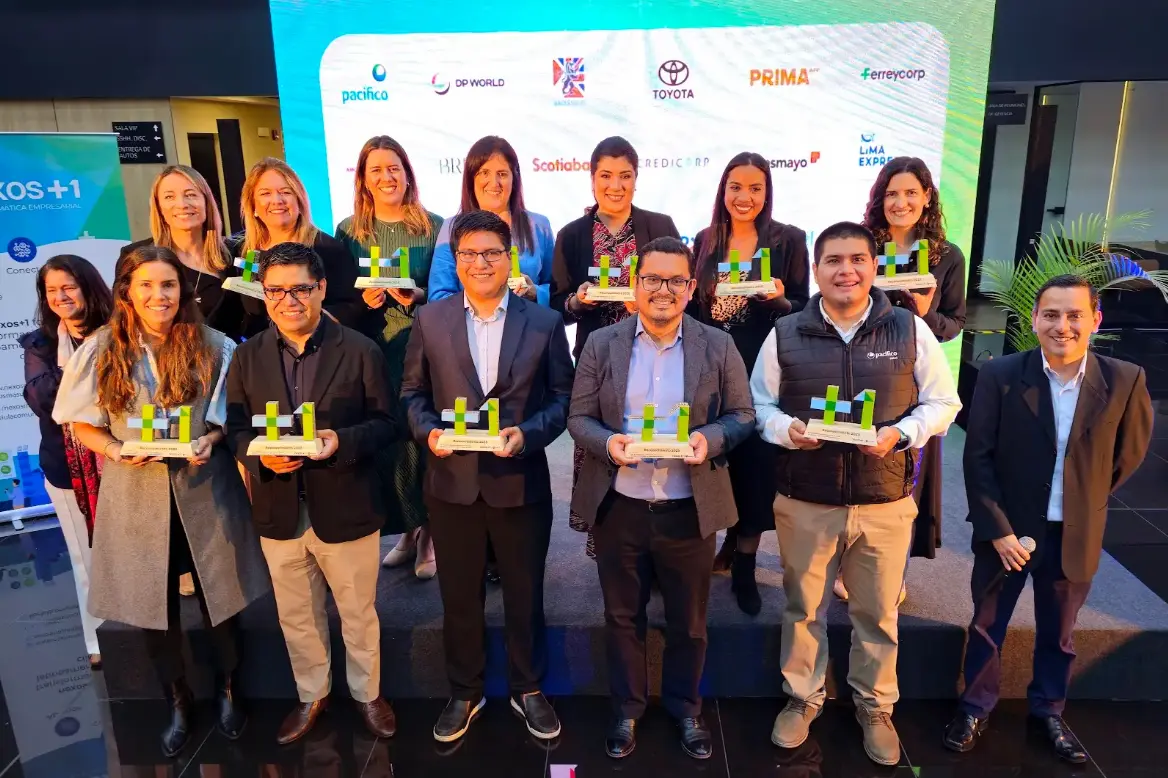
The awards were a central moment in highlighting concrete advances in the seven categories that today set the business agenda: emissions reduction, adaptation and resilience, transformational leadership, transparency, circular economy, value chain and innovation. Each of these categories showed tangible examples of how companies are accelerating their transition:
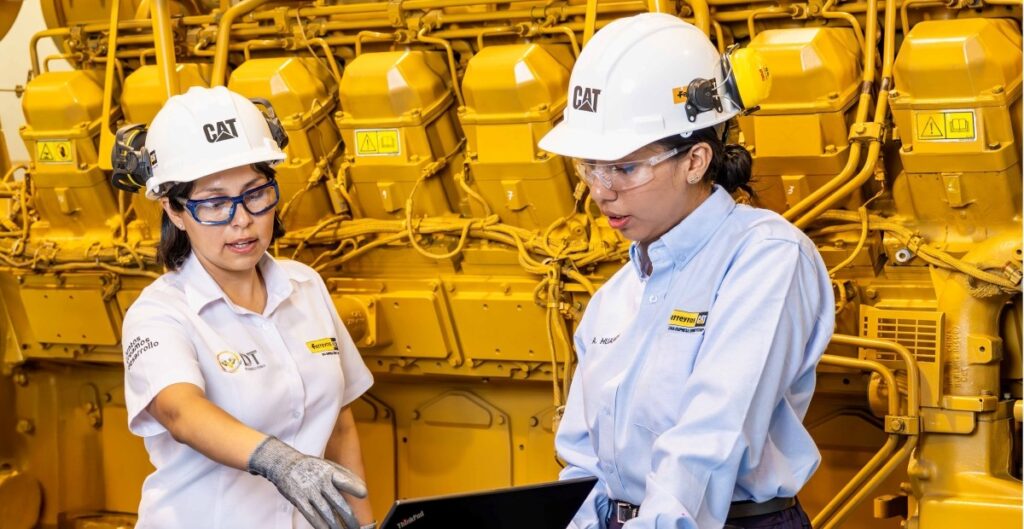
- Emissions reduction - Ferreycorp: Implementation of advanced monitoring tools to accurately map your decarbonization path. The approach evolves from simple measurement to strategic action, enabling informed decision making to accelerate the achievement of your ambitious carbon footprint reduction goals.
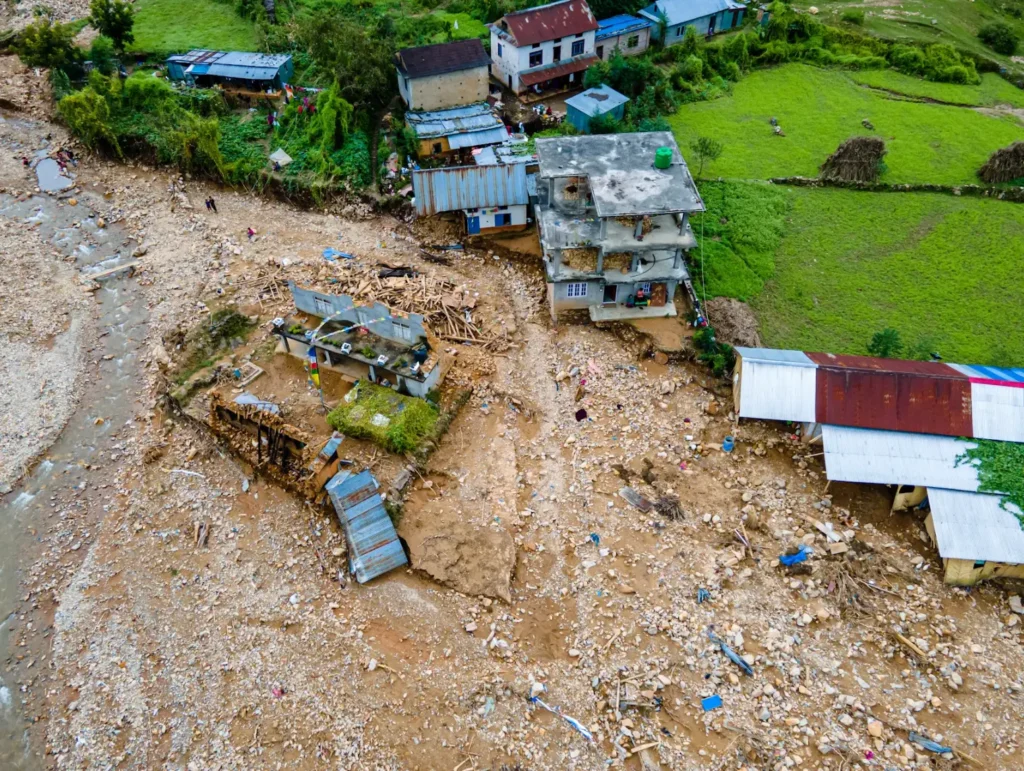
- Adaptation and resilience - Lima Expresa: Investment in world-class technology to increase operational resilience to climate change risks. This includes stabilization and protection of key river slopes. In addition, they demonstrate innovation in water management through the use of xerophytic gardens, selecting species that ensure optimal lifespan with minimal water consumption.
- Transformational Leadership - BCP: Deep integration of sustainability at the core of its corporate strategy. This vision has driven a large-scale internal mobilization and the creation of an impact portfolio focused on transition. Its commitment materializes in the financing of sustainable projects and initiatives for more than US$$2 billion by 2025, with verifiable climate mitigation and adaptation components.
- Transparency - Southern Peaks Mining: In a strategic sector for the energy transition such as mining, the company prioritizes building trust. This is achieved through comprehensive and proactive communication of its processes, methodologies, inherent challenges and, fundamentally, the strategic budgets associated with its commitments. This radical transparency is key to demonstrate a real and aligned commitment with senior management.
- Circular economy - Toyota: Promoting a circular economy model through the revaluation of discarded airbags. This project exemplifies open innovation by integrating academia (PUCP) and the community (women from Mi Barrio) to co-create innovative and circular solutions, giving a new useful life to discarded materials.
- Value chain - Arca Continental: Commitment to mitigating the impact of its logistics, promoting the adoption of lower emission technologies, such as trucks with Euro 5 technology. At the same time, they strengthen their social impact on the community of Pucusana, using investment mechanisms such as Works for Taxes to generate local development.
- Innovation - Pacasmayo: Leadership in the redesign of products with the objective of minimizing their environmental footprint and generating social benefits. This includes the launch of solutions such as Ecosaco and the development of lower-impact additive cements. In adaptation, they promote the co-processing of sugarcane bagasse and the design of more efficient river defenses to strengthen the resilience of communities.
All these categories reflected the same message: companies are making strategic, measurable and courageous decisions to move forward on climate action. And when that effort is recognized in community, it becomes even more powerful.
In their speeches, María Paz Cigarán, founding partner and executive president of Libélula, and Polo Macera, founding partner of Libélula, recalled the raison d'être of this community. The More One was born to accompany those who drive sustainability from within, often facing resistance, high expectations and complex decisions. As Polo said: “Big changes start with a small group of people determined to add up.”
A stark reminder that when companies meet, listen to each other and move forward together, the impact really multiplies.