Currently, the aim is to focus on a strategy of "positive nature" based on justice and people, i.e., an approach to economic development that places nature at the center, measuring the progress we make according to the impact we have on the environment. This strategy becomes even more relevant in light of the major global natural disasters caused by climate change.
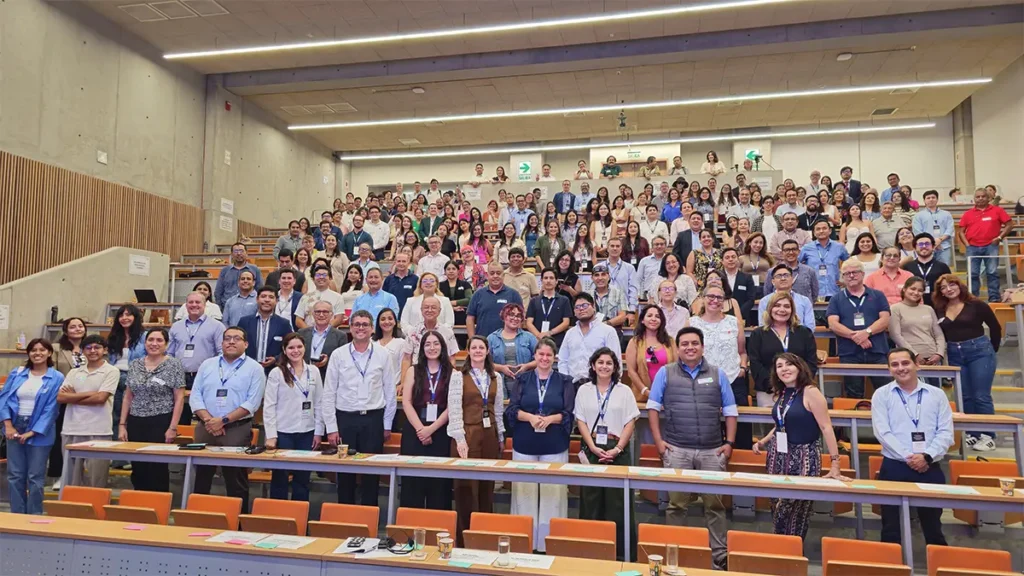
Tim Christophersen, vice president of Climate Action at Salesforce, explained more about the company's commitment to a sustainable future at the ninth edition of the nexos+1 Forum Latam 2024, a conference focused on corporate climate action on innovation and sustainable transformation. There, Christophersen explained how companies can bet on a positive nature to reduce their environmental impact.
Salesforce is the global leader in CRM with AI, and recognizes that the climate crisis is aligned with the biodiversity crisis, so it prioritizes philanthropic investments that generate co-benefits for the climate and nature. Thus, it established at its foundation - 25 years ago - that it would donate 1% of its capital, 1% of its personnel's time and 1% of its products to different causes. It is through this initiative that it currently has allocated 700 million dollars in philanthropic donations. In this way, each Salesforce employee has one week each year to devote paid volunteer time to a charitable cause of his or her choice. This allows money and time to be donated to NGOs and organizations that seek to make a positive impact on society.
Why “positive nature” and why now?
Everything we built as a global civilization over the last 10,000 years is based on a stable climate and a functioning biosphere, and we have begun to take these things for granted. We assume that there will always be fish in the ocean and that the climate will always allow us to run our businesses.
It is important to remember that there is no economy if we do not have a healthy ecosystem. It is estimated that we require $8.1 trillion between now and 2050 to address the interrelated crises of climate, biodiversity and land degradation. But, for every dollar invested in restoration, are generated 30 to the benefit of the economy. Promoting policies of a positive nature can generate more than $10 trillion in annual gains for businesses and create more than 395 million jobs, by numbers of the World Bank. As a result, governments around the world are beginning to regulate not only the climate, but also biodiversity, which is already even more imbalanced.
Christophersen pointed out that Salesforce's strategy focuses on three points. The first is reducing the impact on nature across its entire value chain including data centers, offices, people and products by 2025. The second point focuses on leading large-scale nature restoration, making investments and forging partnerships to protect and restore nature on a large scale. Here, Salesforce is supporting the conservation, restoration, and growth of 100 million trees by 2030 through 1t.org. The last point is to accelerate the success of the customers and the positive nature movement through solutions such as Net Zero Cloud to help its customers accelerate their sustainability journeys.
In this regard, during nexos+1 Latam 2024 Forum, Pía Zevallos, General Manager of Dragonfly, He stressed that valuing nature in economic terms is helping the private sector to understand the true value of ecosystem services, which facilitates decision-making to halt and reverse the loss of biodiversity and natural ecosystems.
In Latin America the most important issues to be more sustainable are the use of land, water and sea. This is especially relevant due to deforestation for agriculture and overfishing. For example, about 66% of marine areas are already degraded, and more than a third of all marine fish stocks are outside safe biological limits. The loss of nature is accelerated by climate change, and is also influenced by resource exploitation, pollution and invasive species.
Thus, nature is under severe pressure, and this is beginning to have an impact on the performance of companies. For example, those that depend directly on nature, such as agriculture, food, hospitality and tourism, are at risk from these climate changes. Christophersen stressed that not only those companies are affected but also value chains. “That is where companies must reduce their effects on nature, analyze the direct impact and the dependencies you have,” he stressed. He also pointed out that data centers use water for their cooling systems, so alternatives must be sought to reduce consumption.
In this context, Lima and other Latin American cities depend on water from the Andes and glaciers are disappearing due to climate change, which means that high Andean ecosystems, and in particular forests, need to capture and then store and slowly release the filtered water downstream. Social movements such as Andean Action (which started in Peru, is sponsored by Salesforce in partnership with Ecopreneurs and received recognition Earth Shot Prize) seek to save the high Andean forests that are so important for water and the environment. According to data from Acción Andina, only 10% of all high Andean forest areas remain, so there is an enormous need to restore them.
Salesforce therefore invites companies to develop and implement the “positive nature” strategy and integrate it into their climate action plan. We have the opportunity to generate a green and balanced future.