A project that connects recyclers, companies and municipalities to turn waste recovery into formal employment, stable income and local economic development, through business strengthening and the articulation of the recycling value chain.
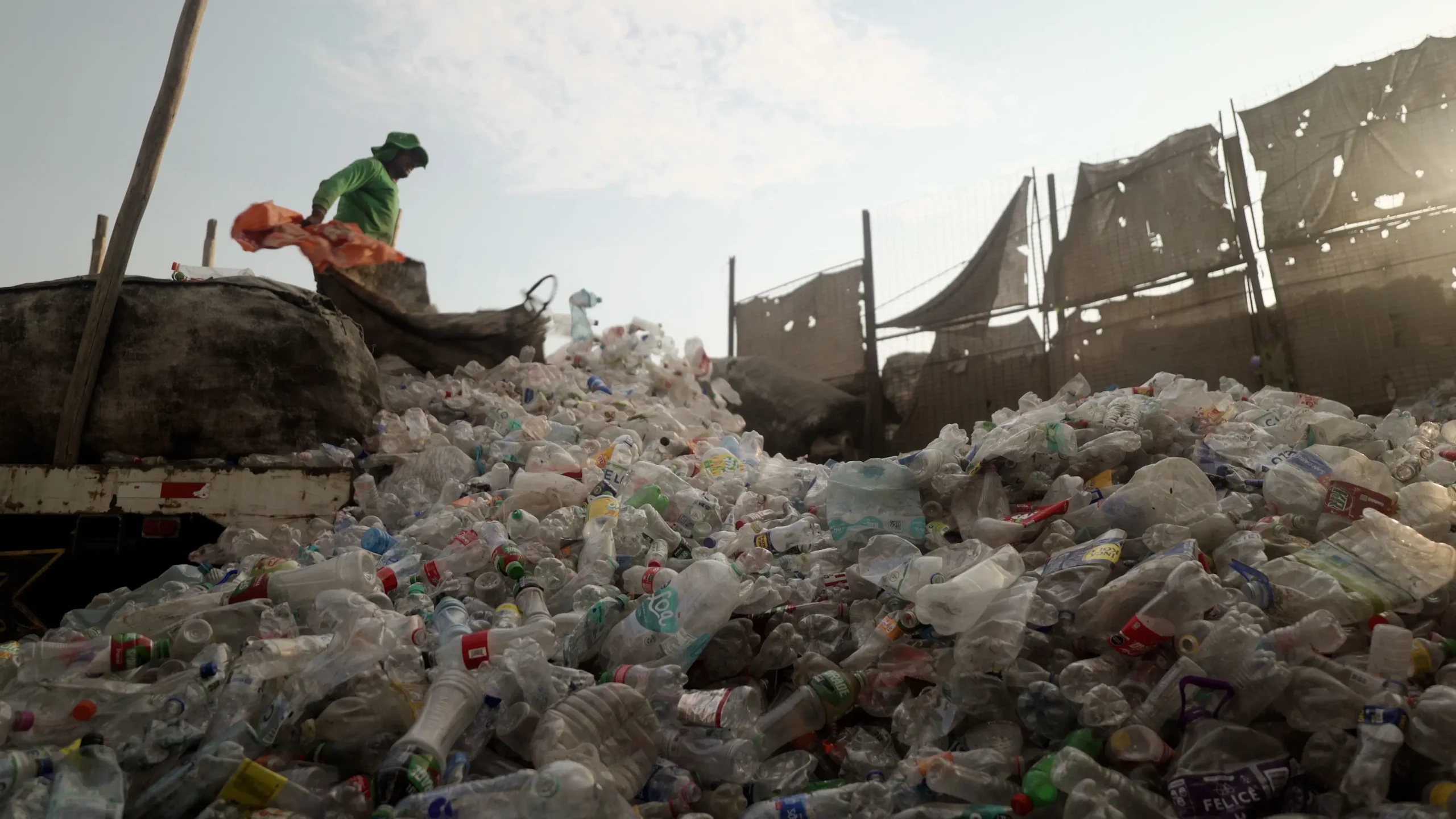
Peru generates more than 9 million tons of waste per year. Recycling supports the work of more than 500,000 people, many of them women and young people operating at the most vulnerable link in the chain. However, less than 2% is formally recycled.
In Arequipa, the challenge is concrete: the region generates 355 thousand tons of waste per year. Of the total, about 16% corresponds to usable inorganic waste, about 59 thousand tons, but only 6% is recycled at the regional level. This reveals a significant gap between the potential for recovery and its effective use.
Although there is availability of material, potential demand and actors throughout the chain, weak coordination generates loss of value, unstable income and barriers to guaranteeing a constant and traceable supply. This fragmentation weakens the economic sustainability of recycling, slows down formalization and restricts the investment and growth capacity of the sector's actors.
The economic potential exists. What is lacking is articulation including.
The project Green Jobs Arequipa, powered by TechnoServe and Anglo American Foundation, was created to close this gap through technical assistance, business strengthening and territorial coordination, connecting recyclers, companies, municipalities and other actors in the ecosystem so that waste recovery functions as a true productive chain.
The strategic opportunity of the project lies in professionalize the productive base of recycling, where women and young people predominate, to increase the competitiveness of the entire value chain. By promoting formalization, socioeconomic gaps are closed and leadership skills and economic autonomy are strengthened. This approach seeks to consolidate a sustainable business model, articulated between companies and municipalities.
The technical implementation of the project is led by TechnoServe in Arequipa. Dragonfly contributes to the strategic communication and articulation of actors, while Recicla Latam accompanies the environmental education and community mobilization actions.
The goal is concrete: to create or strengthen 352 green jobs in six districts of the city, increasing their income and market connections. It also seeks to raise awareness among more than 41 thousand people and consolidate a more coordinated and inclusive system, where women and young people have better opportunities for their development.
Early results show that coordination does have an impact. More than 15,000 homes and businesses have been sensitized; 10,800 are already part of recycling systems. 8,500 students and teachers have participated in training processes.. In addition, the following have already been 8 strategic alliances and 19 stakeholders have expressed their willingness to implement actions.
The challenge now is to add new strategic actors to strengthen the value chain. The invitation is open to companies, municipalities and organizations interested in local actions with direct impacts on the circular economy.
Join the project and is part of the construction of a more coordinated, inclusive and competitive recycling system for Arequipa.