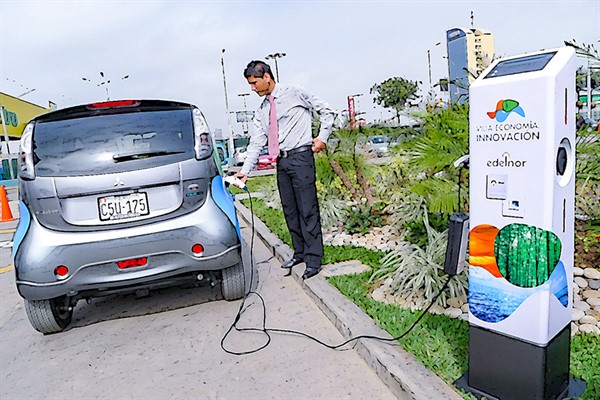
Why is it that when we talk about electromobility in Latin America many of us evoke a futuristic image, when in some countries it is already a reality? Why is it that when we talk about private transportation we think that we prioritize it over public transportation? While the latter is relevant in social terms, both are complementary and have an impact on environmental and economic issues. It is urgent to transform our approach if we aspire to achieve neutrality of greenhouse gas emissions by 2050 and meet the sustainable development commitments of our region.
Taking Peru as an example, it should be one of the countries most interested in accelerating this transition, and thus reducing the incidence of environmental pollution problems associated with transportation. At the South American level, Peru tops the list of countries with the worst air quality, causing approximately 176 deaths per million inhabitants (The Lancet Countdow, 2023). It is also highly vulnerable to climate change, like most of Latin America. The discussion and/or weighing of benefits vs. economic impact is not a problem that concerns only Peru, but has also been discussed by several countries in the region. Why not take success stories such as Colombia as an example, what prevents tax and operational incentives from being considered so that all consumers can have access to electrified vehicles? The lack of regulation hinders access to international cooperation incentives that could accelerate the modernization of our fleets.
It is important to consider that, in addition to the environmental advantages, the promotion of electromobility would benefit the end user, mainly in economic terms. According to the European Environment Agency (EEA), it is estimated that an electric hybrid car can save between 20% and 40% in fuel compared to a conventional gasoline or diesel car. On the other hand, electrified vehicles reduce both environmental and noise pollution. In addition, when considering efficiency, energy cost, maintenance and resale price, they are a better investment in the long run.
Globally, electrified vehicles account for 18% of private vehicle sales, according to BloombergNEF. In Latin America they represent only 1%, although their sales increased 26% in 2022. The countries with the highest representation of electrified vehicles are Uruguay with 4.2%, Costa Rica with 3.9% and Colombia with 1.7%. What is holding us back from taking advantage of the benefits of this new technology?
Electromobility is a global reality, there is no turning back. Major automotive brands have been developing aggressive strategies to offer more and more affordable vehicles to more and more people, in line with their own sustainability goals. Traditional internal combustion vehicles are a thing of the past. It is time to adapt to the future and offer the necessary incentives to benefit from the advantages of electromobility.
Column published in El Peruano, edited for nexos+1.