“At BBVA, the sustainability is an essential part of our strategy, including the fight against climate change, which is one of the greatest disruptions humanity has ever faced,” said Carlos Torres Vila, Chairman and CEO of BBVA.
The bank has mobilized over the past three years (2018-2020) more than. 50 billion euros in sustainable financing, so it is well ahead of its target of mobilizing 100 billion over eight years (2018-2025).
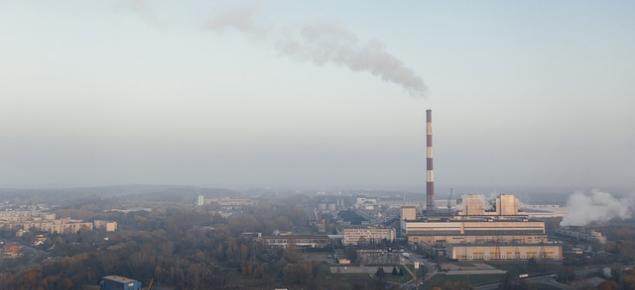
In 2018 BBVA committed to to align its credit portfolio with the global warming goals of the Paris Agreement, emissions, and supports the need to achieve zero net carbon dioxide emissions by 2050. To achieve these goals, it is key to promote the use of clean and sustainable energies as opposed to more polluting ones, such as coal, which is the fossil fuel that contributes most to global CO2 emissions, with 40% of the total.
“Today we have taken another very important step, committing ourselves to reducing our exposure to coal-related activities to zero. We will actively accompany our customers on this path, supporting them with financing and advice in their transition to models based on sustainable energy,” said BBVA's Chairman and CEO.
The financial institution has announced that it will no longer finance customers whose coal-based activities account for more than 5% of its revenues, as stated in its update of the BBVA's Environmental and Social Framework. Companies that exceed this threshold will only be eligible to receive financing for renewable and sustainable energy projects. The definition of the threshold is in line with the criteria of the Science-Based Target Initiative, an initiative that proposes a methodological approach to setting science-based decarbonization targets. More than 1,200 companies worldwide have committed to this initiative, including BBVA, the only Spanish bank.
According to the IPCC, coal-fired electricity generation must be reduced to near zero to achieve a carbon-neutral economy by 2050.
The fundamental step taken by BBVA will be completed over the course of 2021 with plans and targets to accompany the decarbonization of its customers in all CO2-intensive sectors., emissions, which, together with coal, account for two-thirds of global emissions: oil, gas, automotive, steel, cement and transportation. In short, plans that contribute to the goal of zero net emissions by 2050.
Other components of BBVA's Environmental and Social Framework
BBVA has updated the criteria it will follow for the financing of all its customers' activities that have a high impact on the environment and society, as part of its commitment to promote sustainable development and human rights. BBVA's Environmental and Social Framework is based on the standards of international organizations to establish activity prohibitions with clients in the mining, agribusiness, energy, infrastructure and defense sectors.
In addition, since December 2020, activities with customers involved in any use related to oil sands without a strategy to diversify their activity and where these represent more than 10% of their total production are prohibited. Oil sands exploration, production and transportation are also excluded.
New customers in these sectors of high environmental and social impact will be accepted after assessing that their activity is in line with the Framework., based on an analysis by a third party ESG (Environmental, Social, and Governance) expert. This analysis process will be updated periodically as long as the relationship with the client is maintained.
Environmental and Social Framework emanates from the General Sustainability Policy and the BBVA's Corporate Social Responsibility Policy. This framework extends the limitations of the bank's previous sectoral rules and also integrates the defense performance standard, where it lists the activities and products that it will not finance because they go against its principles.
BBVA is grateful for the valuable contribution of its stakeholders in the preparation of this Environmental and Social Framework, including international organizations, regulators and non-governmental organizations.