5 lessons from the pandemic to address climate change in Latin America

While society and business as a whole continue to cope with the impacts of the coronavirus pandemic, experts are already predicting the next major global crisis: climate change.

With the decrease in infections and the economic recovery, we see a light at the end of the COVID-19 crisis in our region. However, experts reaffirm that a major challenge lies ahead: the Climate Change crisis. “The pandemic has given us a real insight into the importance of preserving the environment where we live and where we carry out economic activities. To that extent, we are left with several lessons for the immediate future,” says Marian Buraschi, director of nexos+1, a platform that promotes actions against climate change from the private sector.

What lessons does the pandemic teach us?

The specialist suggests five key lessons learned:  

Prevention costs less than reaction

A Boston University study says the pandemic could end up costing nearly $16 trillion worldwide, 500 times more than it would have cost to take the necessary measures to prevent it, it explains.   
 
According to Buraschi, the same is true for investment in climate change mitigation and adaptation, since delaying climate action for another 10 years will increase its cost more than threefold in the future, according to the study “The Cost of Delaying Action to Curb Climate Change”.  

Let's listen to science

COVID-19 and climate change show the impact of not listening to specialist warnings.
 
“Science demands that we keeping global warming below 1.5 degrees centigrade. This requires reaching 2050 with a world with zero net carbon emissions,” he said. 
 
He explained that, according to NASA, if global temperature increases by two degrees Celsius, between 184 million and 270 million people will be exposed to water shortages. 

Any impact on biodiversity affects us

As presumably happened with COVID-19, 75% of the new diseases come from animals moving from their natural habitats to urban areas, warned the director of nexos+1.  
 
The expert also stated that the biodiversity conservation is intrinsically linked to the fight against climate change..  
 
This is because deforestation and land use change generate 40% of global greenhouse gas emissions, and account for 47% of emissions in Peru. 

Consultation is vital

This makes it possible to achieve the expected objectives and thus to better face climate change and all the challenges it entails.  
 
Buraschi explains that when we had to face the pandemic, people and companies stepped up, reminding us of human resilience and their great contribution.   
 
Climate change also needs these synergies. If people, companies and governments join forces, they will be able to can solve common problems in less time, at less cost and with more impact, she says.   

Business innovation is indispensable

The pandemic accelerated the development of innovative solutions, from applications to combat the spread of the virus to technologies for teleworking.   
 
In the case of climate change, he explains that business innovation is also key to reducing carbon emissions.  
 
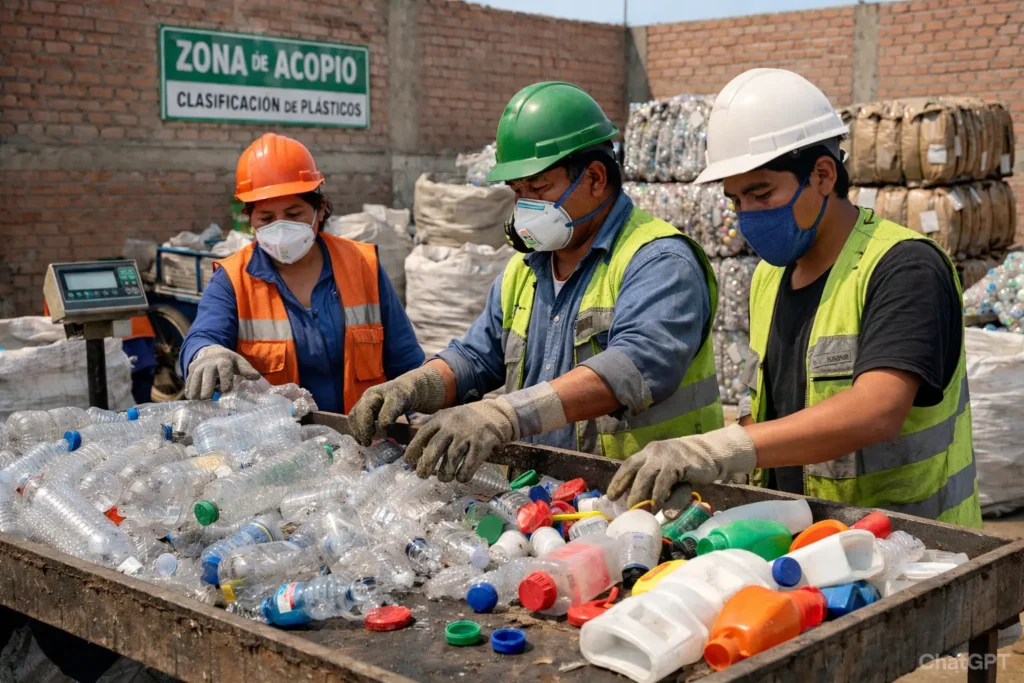
“At nexos+1 we have seen innovations, such as Textil del Valle, which sees circularity as a source of new business. They produce new garments and blankets from 20% recycled fabric fibers and 80% polyester from plastic bottles,” he says.  

Taking these 5 lessons into account is crucial to ensure business sustainability in the future. Therefore, in the first months of 2021, nexos+1 will start a path of organizational transformation with a free virtual event for all Latin American companies seeking to incorporate climate resilience into their business strategy. If you and your company want to be part of the change, you can register at www.nexosmasuno.pe

Join our community

To receive sustainability trends and news on climate change
nexos+1 news
Note published in:
Image: Scor

Schedule a free 30-minute session with our team and find out how we can help you. Let's talk.

Join our monthly newsletter nexos+1 news and receive the latest news from the actors of change.

More good news for the world

Companies
February 3, 2026
As part of its commitment to a more efficient and sustainable operation, TASA has been incorporating solar energy in its vessels.
Companies
January 30, 2026
In 2025, the company achieved for the fourth consecutive year the Fourth Star of the Peru Carbon Footprint program, awarded by the Ministry of the Environment (Minam), consolidating its position as the first real estate company in the country, in its category, to achieve this highest recognition.
Sustainability
January 29, 2026
Discover how AI transforms sustainability into competitive advantage. Climate risk management and corporate profitability.