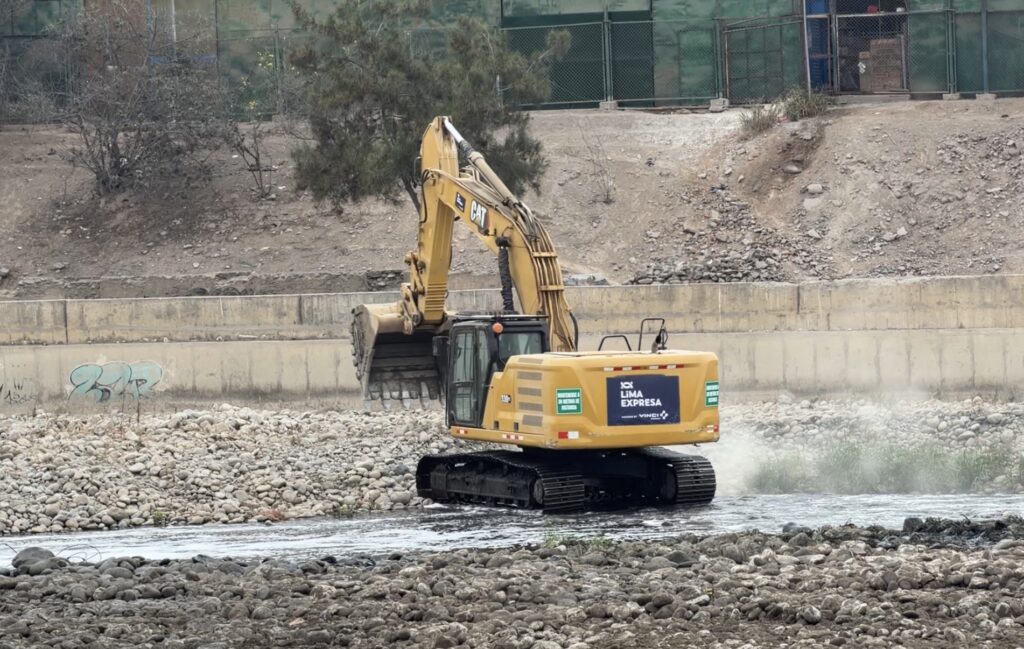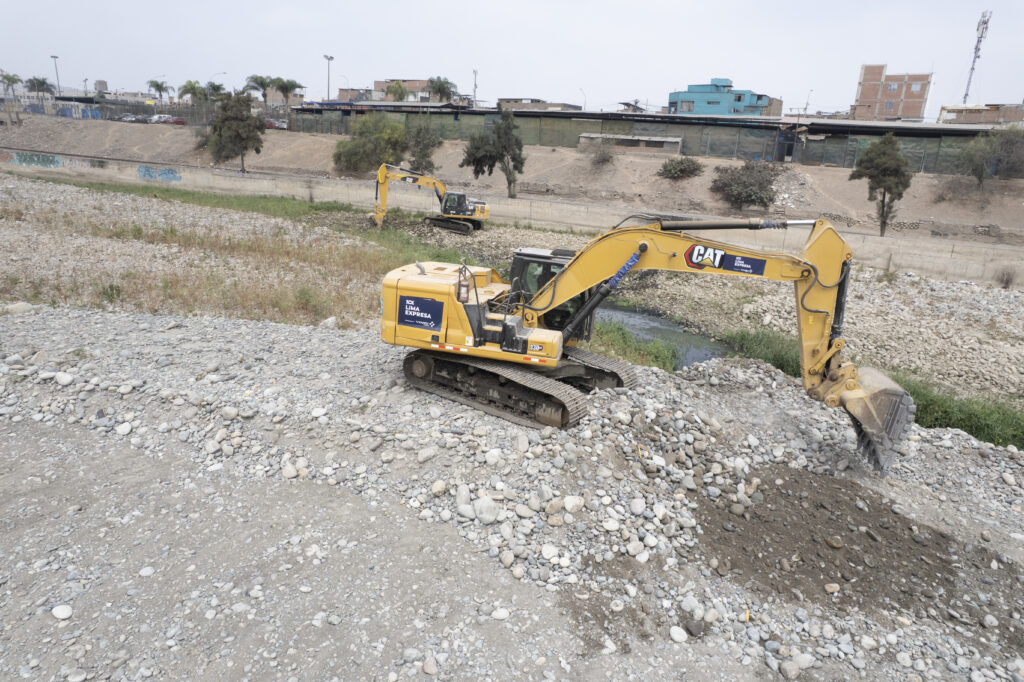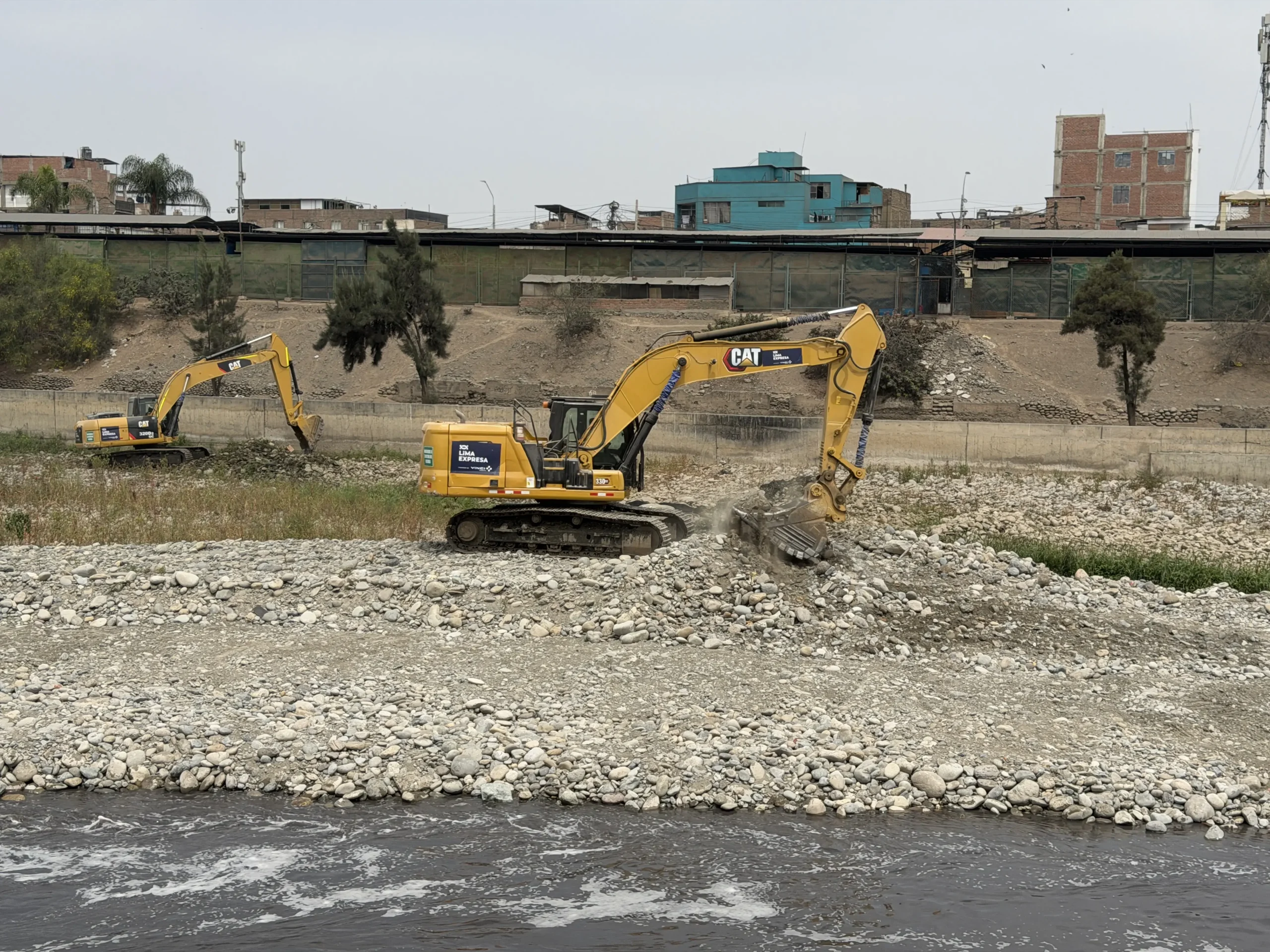
- The concessionaire will invest S/ 1.8 million in cleanup, dredging, management of excess material, and rehabilitation of riverbed protection structures.
- The project covers approximately 1.8 km of the Rímac River, between the Huánuco and Santa Rosa bridges, in the Cercado district of Lima.
- This work is carried out every year. This time, it was brought forward by two months as a preventive measure in anticipation of a possible increase in water flow during the rainy season.
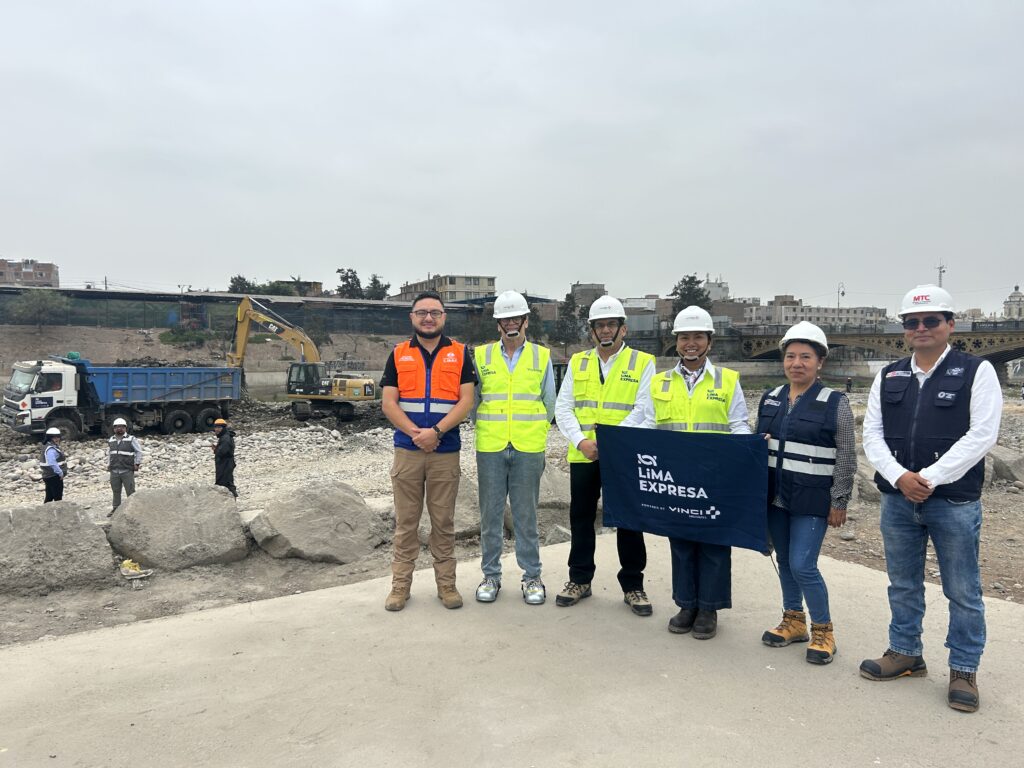
Lima Expresa, a subsidiary of VINCI Highways and the concessionaire for the Evitamiento Bypass and the Línea Amarilla Expressway, moved up its annual preventive maintenance work on the Rímac River bed by two months. The work represents an investment of S/ 1.8 million and covers a 1.8-kilometer stretch between the Huánuco and Santa Rosa bridges.
The project aims to improve riverbed conditions and reinforce the protective elements of infrastructure that is critical to the city. The Gran Túnel Lima Expresa, the Línea Amarilla expressway, and the Vía de Evitamiento run beneath and along the banks of the Rímac River, so prevention and ongoing monitoring of the riverbed are essential to preserving the infrastructure and ensuring the safety and continuity of service for the more than 190,000 vehicles that travel daily on the concession-operated roads.
Lima Expresa has been carrying out this work continuously since 2018 and, This year, it decided to move up the implementation by two months to ensure that the necessary protective measures are in place before the period of greatest risk due to increased flow.
The presentation on the river cleanup and dredging efforts was attended by public and private sector officials, including Carlos Neuhaus, head of the Private Task Force on the El Niño Phenomenon; Cesar Calderón, Deputy Manager of Civil Defense, Prevention, Mitigation, and Reconstruction for the Metropolitan Municipality of Lima; and representatives from the Ministry of Transport and Communications. They were welcomed by the general manager of Lima Expresa, Raúl Díaz Díaz, and the director of operations, Guina Ayora. During the event, the representatives highlighted the importance of coordinating efforts between the public and private sectors to strengthen the city’s climate resilience.
The work includes:
- Dredging and relocation of 12,600 metric tons of material from the river.
- Removal of 6,000 metric tons of river material to be disposed of.
- Clearing of 6,500 m² of vegetation
- Improvements to 1,000 m² of protective rockfill along the Lima Express Grand Tunnel.
- Inspection and improvement of the existing rockfill to address potential erosion damage.
"”This maintenance is part of the preventive work we carry out every year, not just because of the El Niño phenomenon. In addition, our Operations team has conducted drills to prepare for flood scenarios. We want to anticipate contingencies and be prepared to protect our infrastructure and, above all, the safety of those who use our roads.", said Raúl Díaz Díaz, General Manager of Lima Expresa.
Lima Expresa continuously monitors the behavior of the Rímac River and the impact that changes in flow can have on the structures that are part of the concession. Preventive maintenance work is scheduled to be completed by October 2026.
Projects Focused on Climate Resilience
In addition to the annual maintenance of the Rímac River channel, Lima Expresa is promoting initiatives aimed at strengthening the climate resilience of its infrastructure. Between 2019 and 2024, the concessionaire carried out stabilization and reinforcement work on the Rímac River embankment near Zarumilla, a critical area due to its exposure to erosion and landslides caused by natural events such as earthquakes or mudslides.
The project, organized into five phases, incorporated the technology jet grouting to construct high-strength soil-cement columns. This project, driven by VINCI Highways’ international standards, sets a successful precedent for replication in other sections of the river.