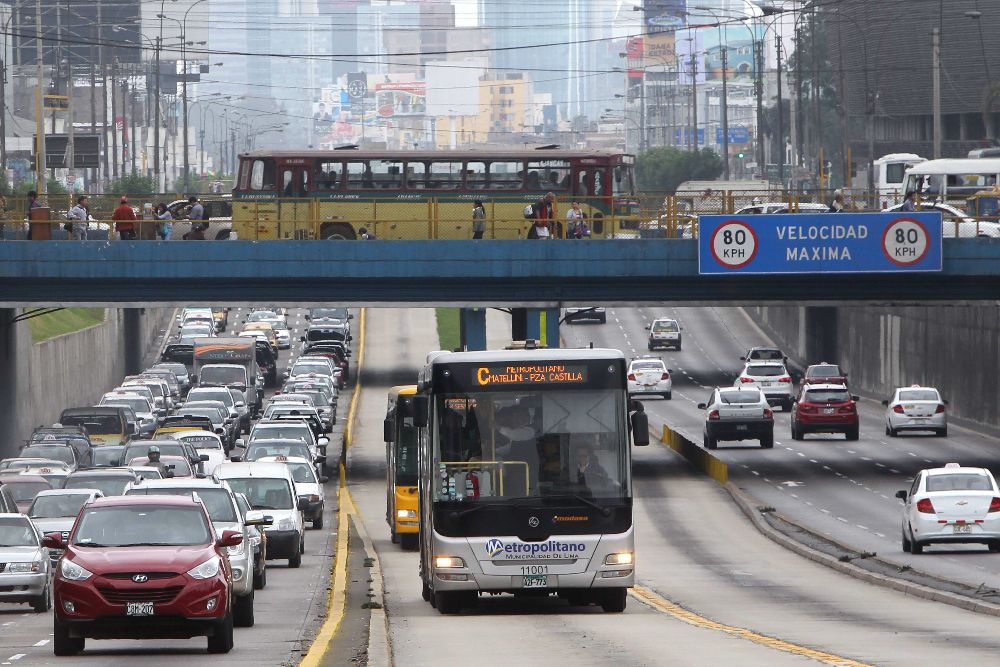
Lima, September 2021. A few days ago, we Peruvians commented with concern on a study by the University of Chicago that places the Peruvian Peruvian capital as the city with the lowest air quality in Latin America, which has caused our life expectancy to be reduced by 4.7 years. The figure is disastrous and places Lima far above other metropolises such as Bogota (2.2 years less), Mexico City (7 months) and Quito (5 months). Undoubtedly, air pollution in the city, due to fossil fuel emissions, is out of control and we should be concerned about reversing this situation. What can we do?
We can all take a variety of actions to combat the effects of climate change, according to Connect with the future, campaign, which has been launched in the Statkraft Peru, a leading renewable energy company, with the aim of raising awareness about caring for the planet and how energy from natural sources (hydroelectric, wind, solar and more) is the solution to environmental problems. Let's take a look at some of these actions:
- Small changes generate big revolutions. Just not taking the car out every day or even sharing rides with other people can be key.
- Cycling or walking short distances can also be a great contribution to our atmospheric health.
- Let's make the effort to organize ourselves and not be in a hurry so that we are not forced to use the car or ask for a cab.
- At home we can also help the planet by reviewing our daily practices: How long does it take us to cook? How many times do we open the refrigerator without having to? How many appliances do we leave on? Let's turn off and unplug what we are not using.
- It sounds complicated, but having plants, small vegetable gardens and compost in our homes is simple and helps the ecosystem. In the case of compost, all you need is a wooden box located in a ventilated space, newspaper and soil. Little by little you can add fruit and vegetable scraps, always mixing them with the soil. After four months, these remains will have become compost, ready for your gardens, pots or biogardens.
- Additionally, it is important to measure our carbon footprint from time to time. This helps us to evaluate the actions we take that affect the environment and make decisions to reduce our impact. You can calculate your footprint at the following link of the organization Dragonfly: libelula.com.pe/discover
Juan Antonio Rozas, Country Manager of Statkraft Peru, comments that 85 % of air pollution comes from the vehicle fleet, and 66 % of this is in Lima and Callao, according to figures from Lima Cómo Vamos. “Therefore, it is essential to focus on transportation and the ways we use daily to get around. Let's ask ourselves if we use cars to cover routes that we could cover on foot or by bicycle and let's keep in mind that, according to the Ministry of the Environment, with each kilometer traveled, 190.5 kilos of CO2 are generated,” he explains.
However, the problem of air pollution in Lima and the rest of our country must commit citizens, private companies and the State to speed up the transition from fossil and mineral fuels (gas, oil and coal) to renewable energies, focusing, above all, on our vehicle fleet. “According to Statkraft's Low Emissions Scenario 2020 report, by 2050 all new cars in the world will be powered by electricity. In other words, a future based 100% on renewable energies is possible. However, in cities like Lima, we cannot wait that long, taking into account its pollution levels, and short-term goals must be addressed, also for the progress of all industries and businesses,” concludes Rozas.
For more information, please visit http://conectaconelfuturo.pe/ and participate in the conversation on social networks with the hashtag #ConnectWithTheFuture.
You can watch the campaign video Connect with the future here:
About Statkraft
Statkraft, is a leading European renewable energy company with more than 125 years of generating clean energy for society. Norwegian state-owned, it has a genuine commitment to sustainability and the fight against the effects of climate change. In Peru, it has nine hydroelectric power plants in different parts of the country that are validated by international organizations such as AENOR and I-REC, so it has renewable energy certificates that prove the origin of its consumption.
Statkraft is not only committed to a carbon-neutral future free of fossil fuels that pollute the planet, but is leading the transition to renewable energy, the only energy that can drive progress and opportunity in the world.