Sustainability has now become a fundamental pillar in companies, which are increasingly committed to introducing more sustainable production systems and manufacturing more sustainable products. A process that goes beyond corporate social responsibility and in which the circular economy is being key today and will be in the future due to the lack of natural resources and the need to value by-products or waste.
Companies «must align business with sustainability. There is no business outside sustainability, nor will there ever be,» explained Víctor Viñuales, director of the Ecology and Development Foundation (ECODES), who also stressed that «companies are essential for building a sustainable world.
Currently, more and more companies are moving towards sustainability not only in Aragon, but also in Spain and internationally. This trend is also being observed in different sectors of activity. For example, the firm H&M is introducing the sale of used clothing, while the household appliance company BSH has launched an appliance rental initiative, and companies such as Ecoalf use plastics collected from the sea to make their articles.
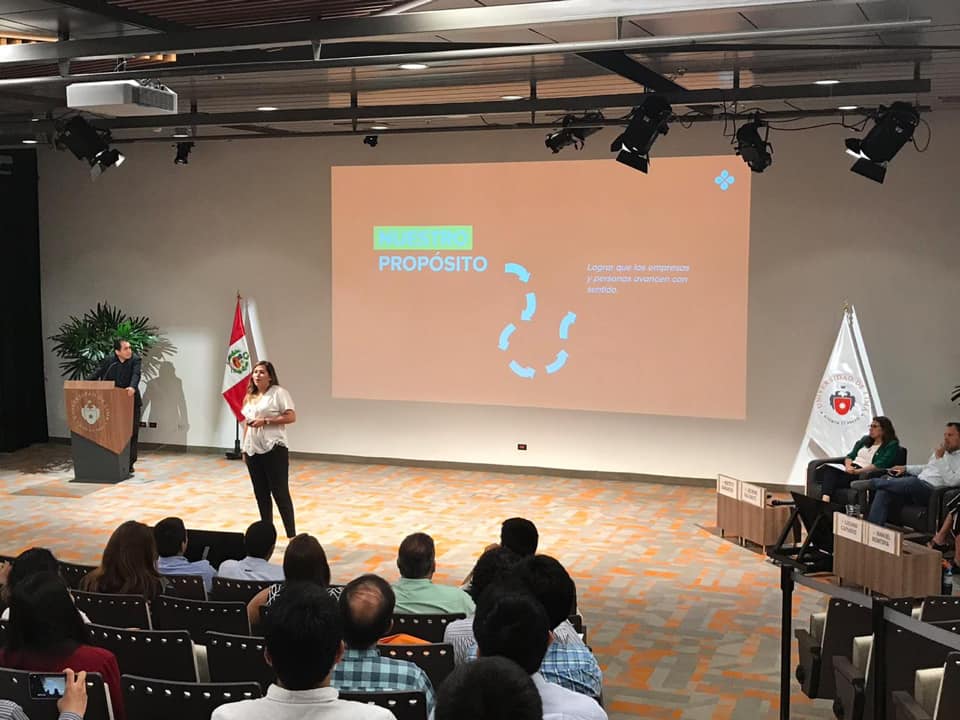
These are just a few clear examples of the commitment of companies to sustainability, which was highlighted at the conference ‘Towards a sustainable future: management, business and environment’, organized in Zaragoza by Business Professional Women (BPW) Spain and BPW Aragón, with the sponsorship of Ibercaja and the Instituto Aragonés de Fomento (IAF).
A step that companies are taking not only because of the fear of new regulations -focused on prioritizing the green economy and punishing the brown economy-, but also because of their commitment to society and the planet and in order to respond to consumers, since «the 96% expects companies to be responsible in environmental matters», added Víctor Viñuales, who participated in this conference to talk about the circular economy.
The company's commitment to society has been evolving. «Before, companies were concerned about what happened in their stores, but now they are also concerned about what happens in their suppliers, the chemicals used, the pollution of rivers, the types of cotton used or the materials used... They are concerned about everything that has happened before and now» because, in addition, «more and more they are not selling things, but services». A trend that can be seen in all companies across the board and through specific examples such as Volkswagen, which no longer focuses on selling cars, but on the best mobility solutions.
«Moving towards an economy,» added the director of ECODES, "that makes peace with nature will be good for the economy and for the planet," since, for example, it would prevent 365 fragments of microplastics per square meter and prevent people from ingesting around 250 grams of microplastics per year.
Sustainability pays off
Sustainability also opens up new lines of business for companies or makes it possible to achieve profitability. Companies like BSH Electrodomésticos España are an example. «We have been working on energy efficiency for some time now,» said Ramón Villacampa, corporate head of Environment, Safety and Occupational Health at this company, which has set itself the goal of being CO2 neutral by 2030.
«The 33% of the appliances sold in Spain are from BSH, but they account for 40% of what is sold in cash. It's profitable because you get into a higher segment of the range.» The company is also committed to the circular economy. At its treatment plant, 13-year-old appliances arrive that contain plastics with retardants that are now banned and cannot be recycled. A reason why the initiative to rent out appliances has been launched. «You have to close the cycle without losing ownership of the product. That is why it is rented, to recover the product and be able to reuse parts» that are still in good condition, for example.
Contazara is another Aragonese company that is committed to sustainability and confirms that it is not incompatible with profitability. The company has worked on reducing its carbon footprint, achieving a decrease of 85% in the period between 2014 and 2018. In addition, it is also working on eco-design. «Sustainability is not a fad. It is a social necessity. Our clients achieve with our solutions less water consumption because our smart solutions detect pipe breaks, fraudulent consumption...», explained Natalia Cebrián, Contazara's Quality, Environment, Health and Safety Director.
Sustainability also applies to the energy sector. «Investments in sustainability are long term, but safe. Investments in energy savings have to produce a return», said Néstor Gutiérrez, CEO of ATLAS Energía, who emphasized that «nobody doubts that this is the way forward. The company that does not do it will die. The new regulations are in line with environmental and economic sustainability».
The finance and investment sector is no stranger to sustainability either. «Investing in ESG seems like giving up the return, but that is not the case. It is a long-term investment that has to do with the strategic positioning of the company and with intangibles such as R&D&I or brand positioning,» said Miriam Fernánez, head of ESG investments at Ibercaja. Precisely, the entity has investment products in which it is committed to sustainability and with which returns of around 12% are being achieved, among other advantages. And the trend in this sector is also clear because «all entities are going to have to embrace the Sustainable Finance Plan». In addition, the new generations are more sensitive and it can be seen that, for example, the green bond market is on the rise.
Sustainable tourism
Another of the sectors addressed at the conference was tourism and nature, together with sustainability, by Modesto Pascau, president of the Board of Trustees of Ordesa y Monte Perdido National Park, who stressed that «it makes no sense to use without conserving or conserve without using», and therefore stressed the need to work in four key directions. One of these focuses on facilitating the public's knowledge, use and enjoyment of the areas, as well as favoring the work of scientists on biodiversity, contributing to sustainable development and encouraging the participation of all.
These are four complementary directions that should also be based on other lines of action such as the intelligent management of nature and adventure sports, the provision of basic services (parking, toilets, telephone coverage, electricity, etc.) in the park areas, the recovery of extensive livestock farming so as not to lose value in nature, and the stable and non-temporary hiring of people in order to fix population and economic activity in the area.
Public-private collaboration
IAF managing director Ramón Tejedor emphasized the importance of sustainability and public-private collaboration in moving in this direction in the Aragonese community. «In Aragon, we have been these four years a pioneering autonomous community in Spain and a pioneering region also in Europe as a whole when it comes to betting on this double vector of social responsibility linked to the Sustainable Development Goals and Agency 2030. The business organizations CEOE and CEPYME, the two most representative trade unions UGT and Comisiones Obreras and the Government of Aragon signed the »Aragon Social Responsibility Plan», committing companies and non-profit organizations to a series of social, environmental and economic commitments to go far beyond what is required by law. The balance of these four years is positive. Almost 700 companies have already been awarded the social responsibility seal".
The Ibercaja Foundation, as well as Ibercaja Banco, has also been working for people and society, combining it with sustainable development. A framework that includes «the Mobility City initiative that aims to turn Zaragoza and Aragon into a strategic pole around sustainable, intelligent and connected mobility and that will also allow the development of Aragon at various economic, technological, avant-garde and innovative levels», said José Luis Rodrigo Escrig, general director of the Ibercaja Foundation, who added that at Ibercaja «we are very committed to working towards a future that allows us to combine environmental development, modernity and the best quality of life for everyone, especially including the future for our children».
«Working for a more balanced society and offering more equal opportunities, being especially sensitive to the most disadvantaged people, has been part of the Ibercaja Foundation's DNA for more than 140 years. We do this by always adapting to the needs of the environment at all times,» said Ana María Farré, director of Ibercaja Patio de la Infanta.
In this process, companies are key. Those of Aragon «have been committed for many years to changes that have to do with efficiency in production processes, with the awareness of being more careful with the environment, to try to leave a planet, at least, in the same conditions as we found it. In this sense, we are working on many projects in companies and from CEOE Aragón to try to raise awareness in this direction», said Ricardo Mur, president of CEOE Aragón, a business organization in which «we are preparing the strategic plan for the next few years in which this issue is one of those that will be at the forefront. We want to convey to Aragonese companies, with even greater force, the importance of the United Nations Sustainable Development Goals and the importance of the circular economy».
Also speaking at the opening ceremony was Carmen Fernández, President of BPW Aragón, who explained that «sustainable development also concerns small and medium-sized enterprises and microenterprises», which «tend to employ workers belonging to the most vulnerable sectors of society and, in many rural areas, are the only source of employment. They are key to achieving the SDGs».
For her part, the President of BPW Spain, Silvia Vigatà, highlighted BPW's commitment to a sustainable future at a time when «we are experiencing a fundamental change in the way individuals and societies relate to each other». A change that, if understood, will advance the achievement of the UN SDGs.